
What are the Cluneal Nerves?
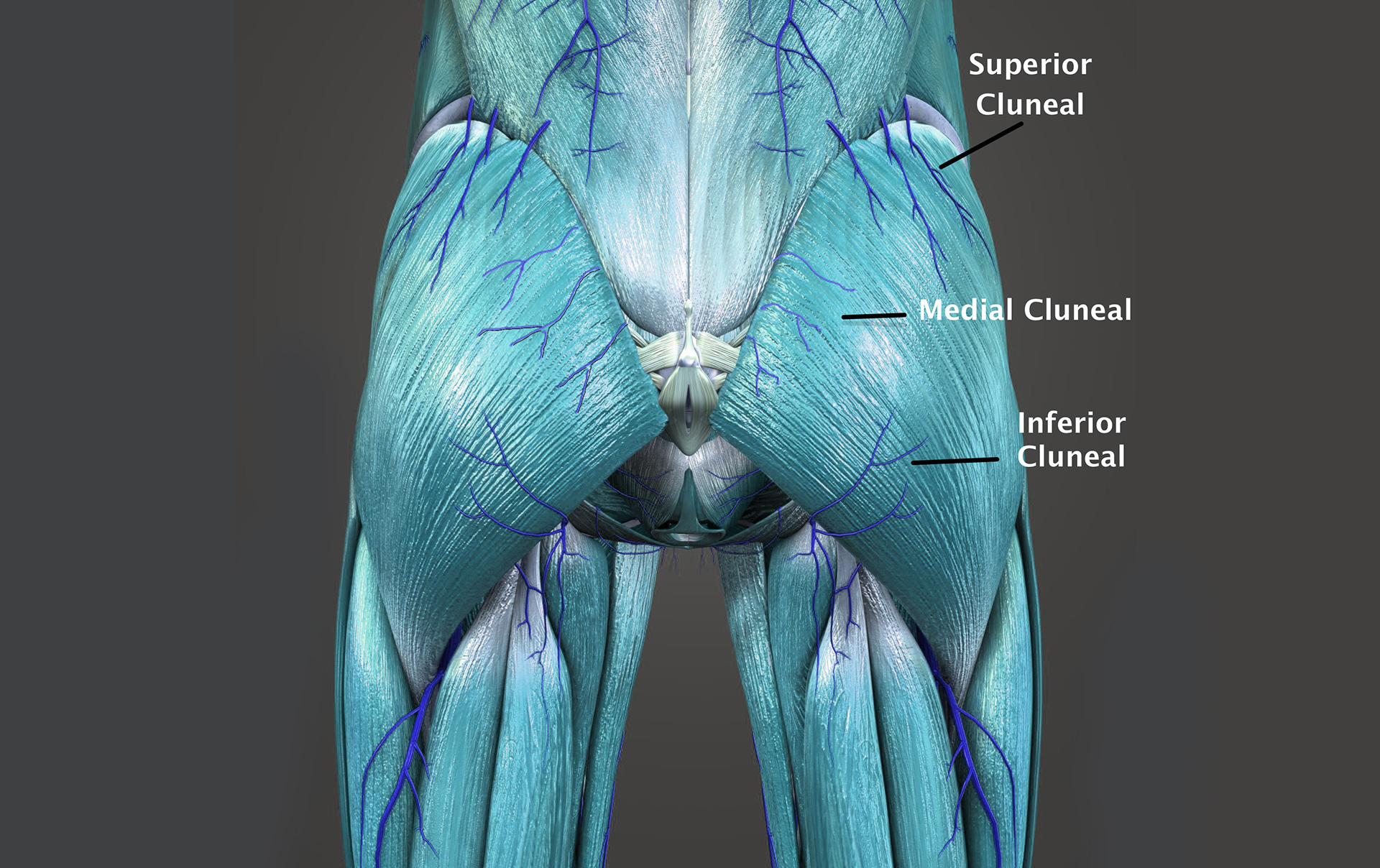
The cluneal nerves are a group of cutaneous sensory spinal nerves in the low back. We will discuss the superior and middle cluneal nerves in this article as they are the most often entrapped. The superior cluneal nerve (SCN) originates from nerve roots in the lower thoracic and lumbar spine, and courses towards the iliac crest where it will pierce through the thoracolumbar fascia. The middle cluneal nerve (MCN) originates from the sacral nerve roots (S1-4) and lays beneath the long posterior sacroiliac ligament.
Cluneal Nerve Entrapment and Low Back Pain
Multiple studies have come out of Japan showing a relationship between the cluneal nerves and LBP. They are often overlooked and underdiagnosed. To identify the superior cluneal nerve, measure 3-4cm(medial branch) and 7-8cm(middle branch) from the midline to the iliac crest. Entrapment will usually occur at these locations, however, pain in the superior cluneal nerves can also be caused by dysfunction of the spine at the thoracolumbar junction, known as Maigne’s Syndrome. The medial cluneal nerve is found just beneath the posterior superior iliac spine to the posterior inferior iliac spine and will pass outwards to the buttocks. Entrapment of this nerve is commonly misrepresented as SI joint pain/dysfunction. If tapping or compressing either of these areas causes a shock-like sensation, that is a positive Tinel’s sign and highly correlates its involvement.
Cluneal Nerve Entrapment Symptoms (you may only have 1 or many of these)
- Low back pain
- Glute/Buttocks pain
- Groin Pain
- Testicular Pain
- Hamstring tightness and/or pain
- Numbness and/or tingling in the back or leg
- Exacerbated by low back movements
- Can mimic lumbar radiculopathy or sacroiliac pain
- Sensitive patches of skin in the low back or hips
Cluneal Nerve Treatment
The Solutions Sports and Spine team will start with a very thorough history and extensive examination to be able to locate whether your low back pain is from the cluneal nerves, in combination with another condition, or something else entirely. We have extensive experience in managing this condition. Some of the techniques we may utilize include Neurodynamics, Mckenzie Method, Stecco Fascial Manipulation, Dermal Traction Method, Dynamic Neuromuscular Stabilization, Neurocentric Approach, Chiropractic Adjustments, and Spinal Decompression.